
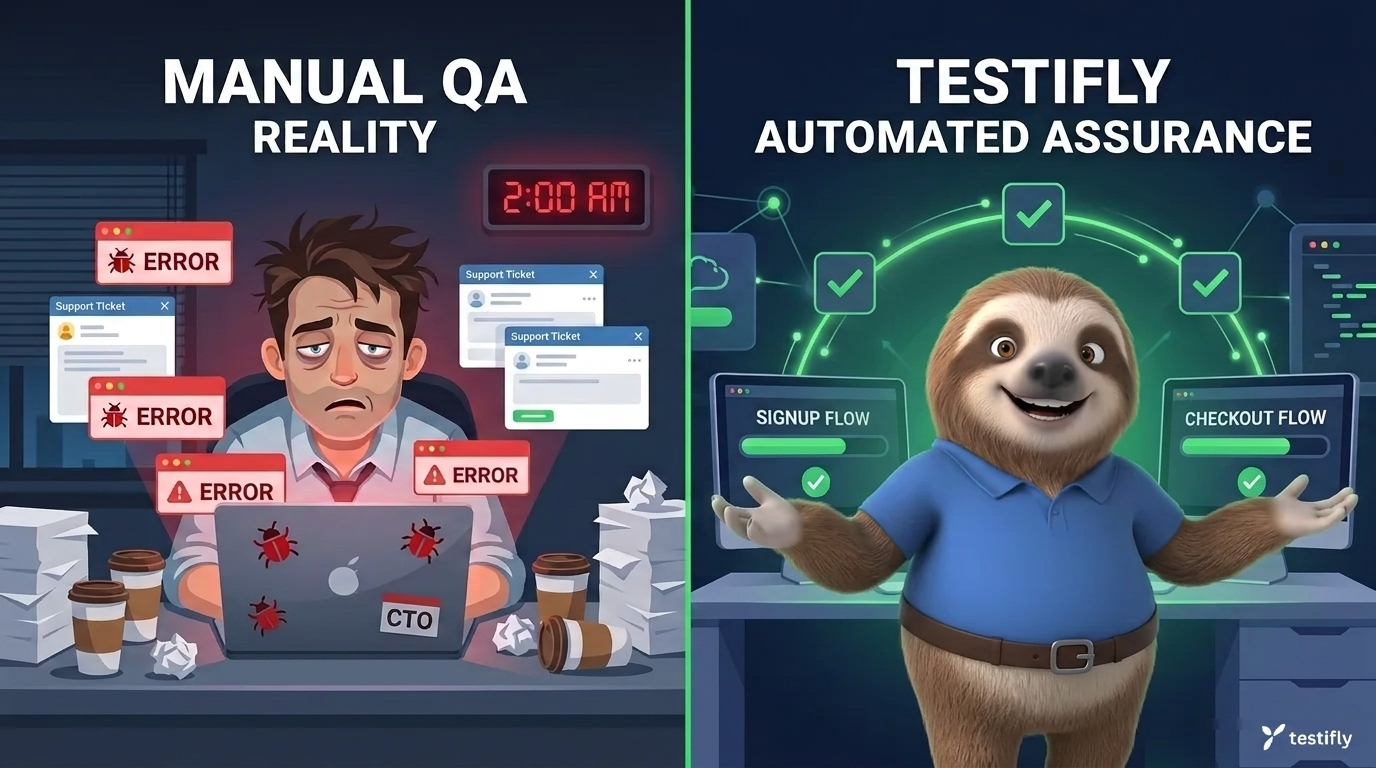
At three people, nobody debated whether to hire a QA engineer. There was no debate to have.
Most QA advice still treats hiring like an open decision
Most advice about QA at small companies assumes hiring is a choice being weighed. Cost against coverage. Salary against runway. Decide, or defer.
That logic works at twenty engineers, or two hundred. A QA hire there is a real line item, competing against other real line items. It can lose that argument for years and the company is fine either way.
At three people, there’s no line item to lose. A founder, a couple of engineers, a product that needs to ship. There’s no seat at that table for a fourth role called QA. Writing as if a decision was made (“we chose not to hire QA yet”) gets it backwards. Nobody chose anything. The role never existed to begin with.
What happens instead when there’s no QA hire?
In the best case, the CTO is the QA. They click through the web app before every release, late, half-attentive, because they wrote the code and can’t see it fresh anymore.
In the ordinary case, it doesn’t happen at all. The customers are the QA. That’s the literal operating model at most companies this size. Someone hits a broken signup form, or a search that quietly returns nothing, and that’s how the bug gets found. Not a test. A support ticket.
The expensive part isn’t the bug. It’s that nobody was checking, so nobody knew until a customer did.
The real question isn’t hire or wait
If a QA hire was never actually available, “should we hire” was never the real question. The real one is smaller: does anyone check the app before a customer does?
That reframe changes what’s worth looking for. Not a cheaper way to run a QA team that doesn’t exist. Something that checks the app without needing anyone to sit down and author what “checking” means first.
What replaces a QA hire when there isn’t going to be one?
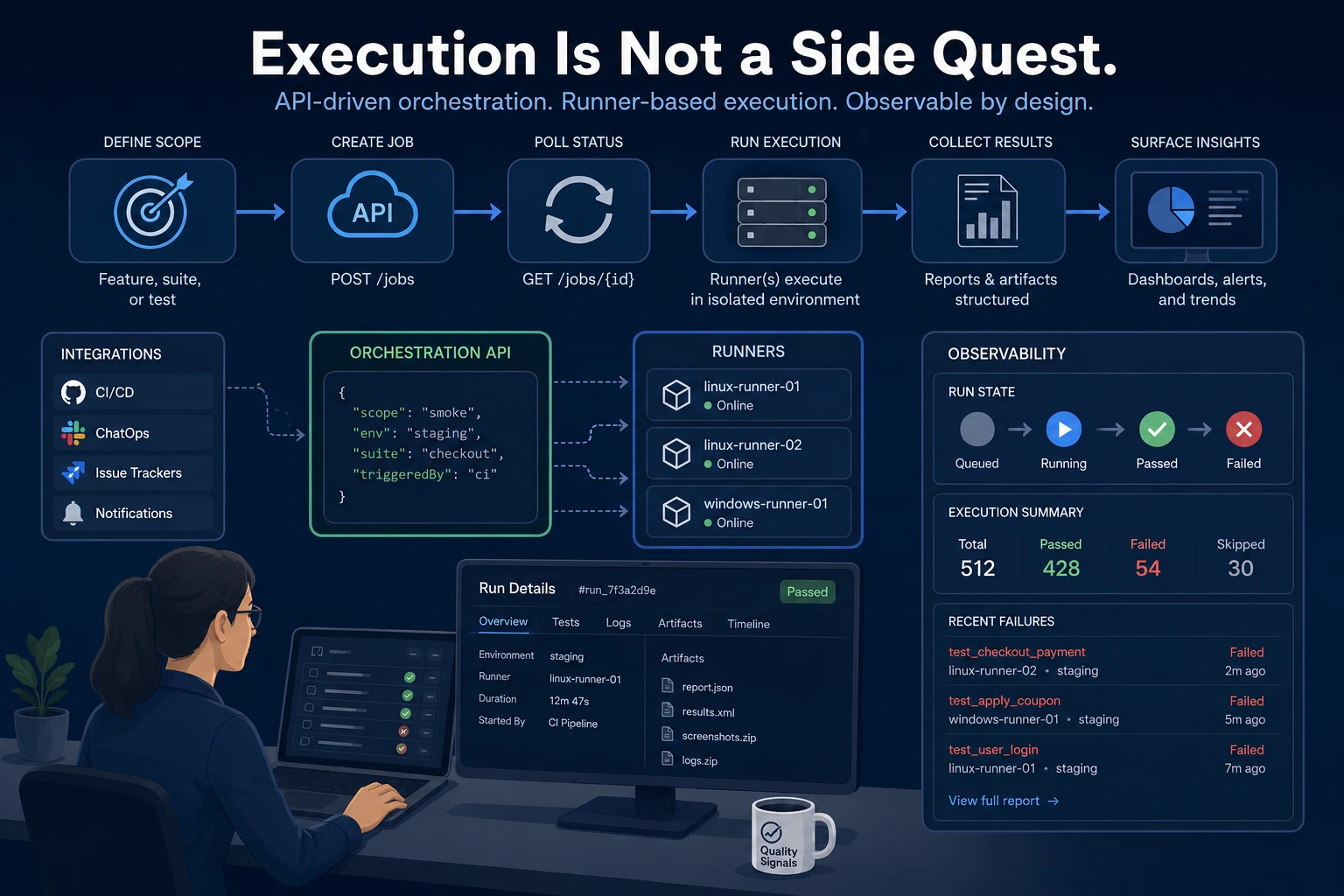
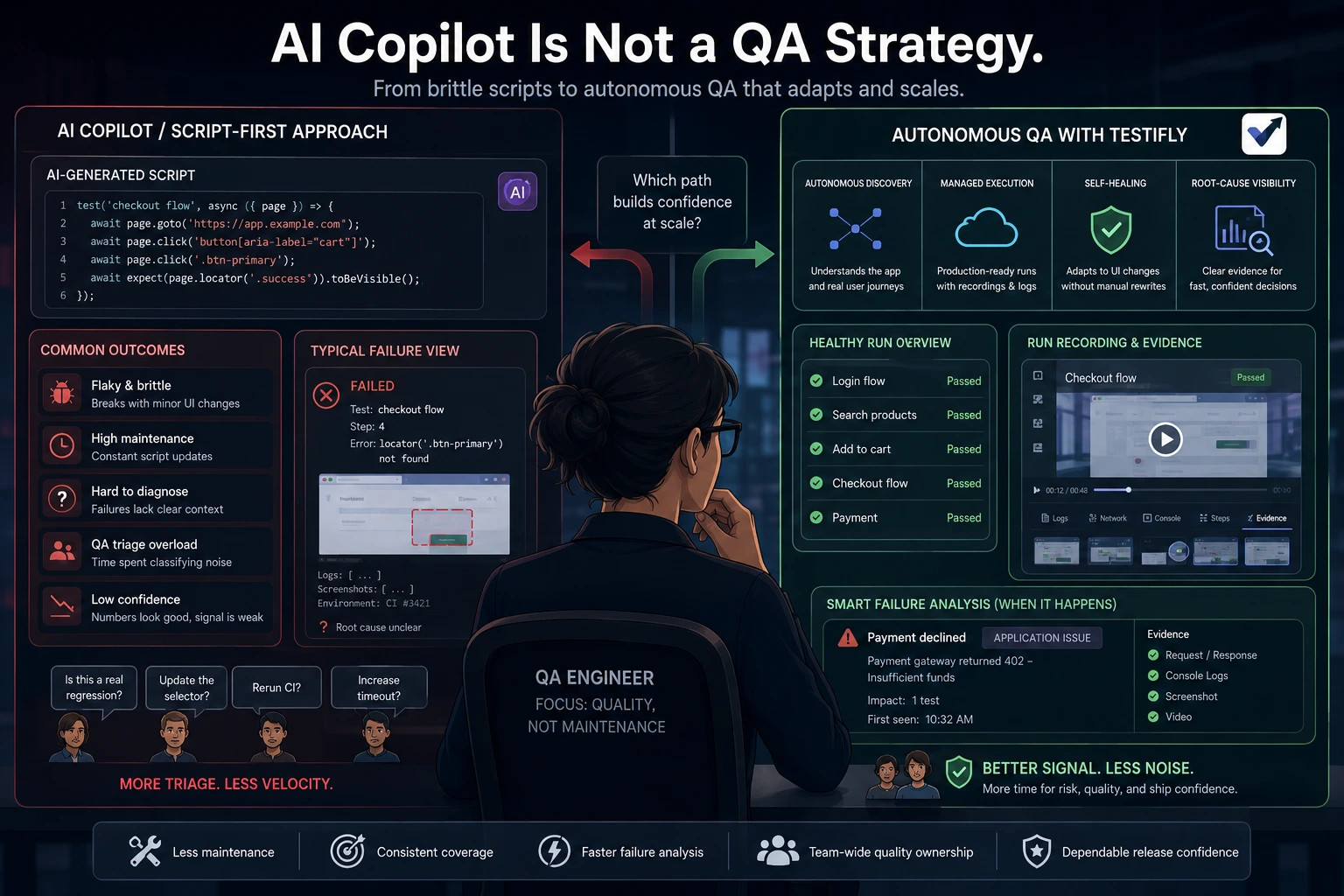
Connect a URL. Testifly finds the flows in the web app on its own (signup, checkout, whatever the product actually does), and runs them again on every deploy, without anyone deciding in advance what “checking” should cover.
When something breaks, it doesn’t just flag a failed step. It shows the session video, points at what actually went wrong, and keeps re-running the same checks as the app changes, so a fix doesn’t quietly go stale six weeks later. That’s the part a founder clicking through the app by hand at 11pm can’t do. Not because they’re not thorough enough, but because nobody has the hours to re-check everything after every change.
Testifly runs the same checks on itself, live, in public, all the time. Same discovery, same nightly runs, no exceptions made for its own code. A company at three people isn’t going to trust a claim about a QA tool. Watching it run against its own product, in public, every day, is the thing that actually earns that trust.